In rural areas, learning gaps begin early because of limited stimulation at home and weak pre-school education, and continue through adolescence because of social, economic and digital barriers. This project strengthens the education continuum at both ends: school readiness for children aged 3–6 years, and life skills and school retention for adolescents aged 11–18 years. It works through Anganwadi Centres, schools, parents and local institutions, and aligns with NEP 2020, ICDS and Samagra Shiksha, contributing to SDG 4 (Quality Education) and SDG 5 (Gender Equality).
The quarter at a glance
| Activity | Sessions / meetings | Participants |
|---|---|---|
| Early stimulation sessions at Anganwadi Centres | 10 | 179 |
| Parent sessions (early stimulation, nutrition, hygiene) | 10 | 220 |
| Life skills sessions in schools | 12 | 523 |
| Digital literacy sessions in schools | 12 | 481 |
| Health, nutrition and menstrual hygiene sessions | 12 | 508 |
| Parent meetings with School Management Committees | 2 | 56 |
| National Deworming Day awareness session | 1 | 89 |
| Community meetings on girls' education and the Right to Education | 10 | — |
| Adolescent peer groups formed | 3 groups | — |
1. Early stimulation at Anganwadi Centres
The field team held 10 play-based Early Childhood Development sessions across Anganwadi Centres (4 in July, 4 in August, 2 in September), including centres at Dhanpura, Kasampur, Teliwala, Jasvawala, Pathri and Garhmeerpur. Activities included:
- Number card game — recognising and counting from 1 to 10 through play.
- Shape puzzle game — identifying and matching circles, squares and triangles.
- Rhymes — "Machhli Jal Ki Rani Hai" and "Twinkle Twinkle", with picture cards and actions.
- Storytelling — "Pyasa Kauwa", told with picture cards, with children answering simple questions.
Outcomes: improved number recognition and counting, better ability to identify and match shapes, and stronger language, listening, memory, vocabulary and confidence in responding.
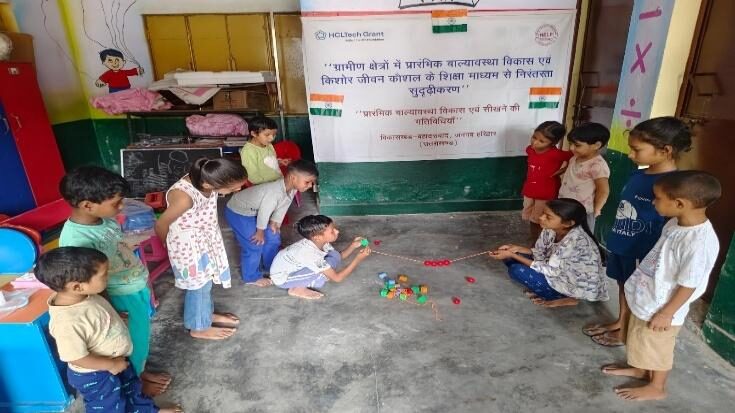
Early stimulation session at an Anganwadi Centre
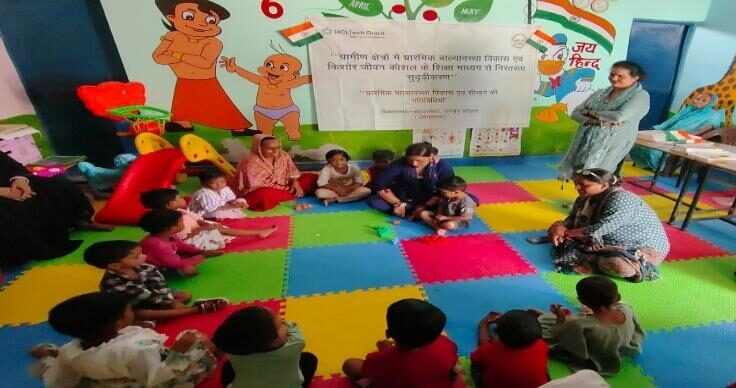
Play-based learning with children at an Anganwadi Centre
2. Parent sessions
Ten sessions with parents and caregivers focused on early learning and child health: early brain development and learning from birth (July), child nutrition, breastfeeding, complementary feeding, health and hygiene (August), and a combined round on early stimulation and nutrition, balanced diet, hygiene and prevention of common diseases (September).
Outcomes: parents gained practical knowledge of play-based learning at home, better understanding of nutrition and complementary feeding, and greater awareness of hygiene and disease prevention.
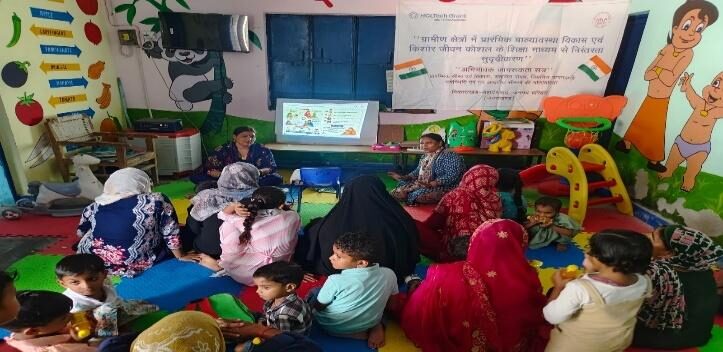
Parent session on early stimulation and nutrition
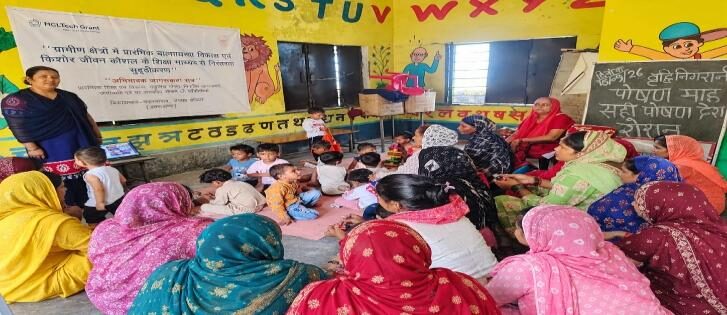
Parents and caregivers at an Anganwadi Centre session
3. Adolescent peer groups
Three adolescent peer groups were formed at school and village level, including at Garhmeerpur, Kasampur and GUPS Ranimazra. Adolescents were oriented on the purpose and benefits of peer groups, which will now serve as a platform for regular sessions on menstrual hygiene, personal hygiene, health and nutrition, digital awareness, life skills and career guidance.
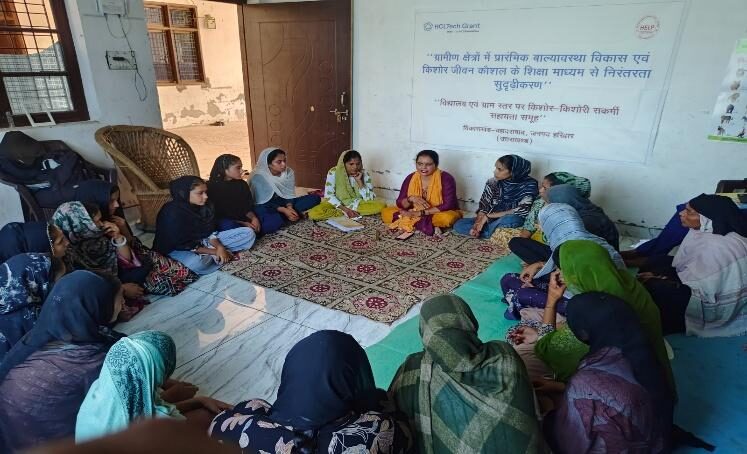
Orientation of an adolescent peer group
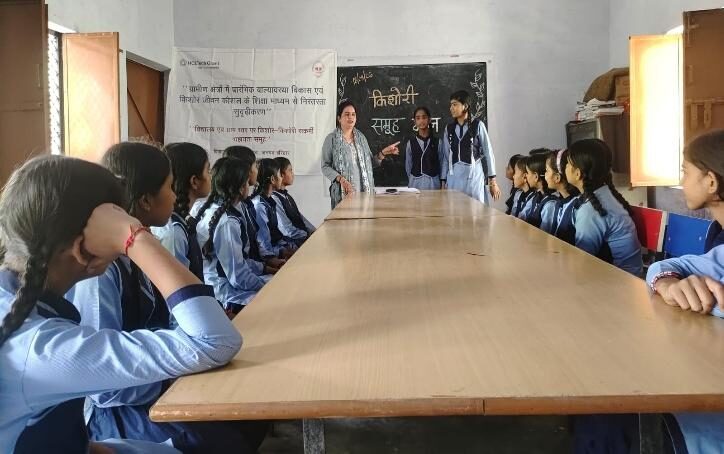
Adolescent girls in a peer group session
4. Life skills sessions
Twelve sessions in government schools reached 523 adolescents. July introduced life skills and their major types; August continued with life skills and understanding emotions; September deepened the theme of emotions through an emotion-identification game, group discussion, healthy ways of expressing emotions, and open discussion.
Outcomes: a basic understanding of life skills in daily life, and a better ability to identify, understand and manage emotions.
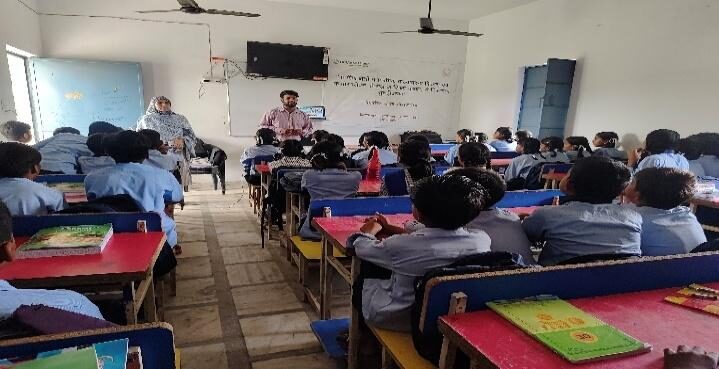
Life skills session in a government school
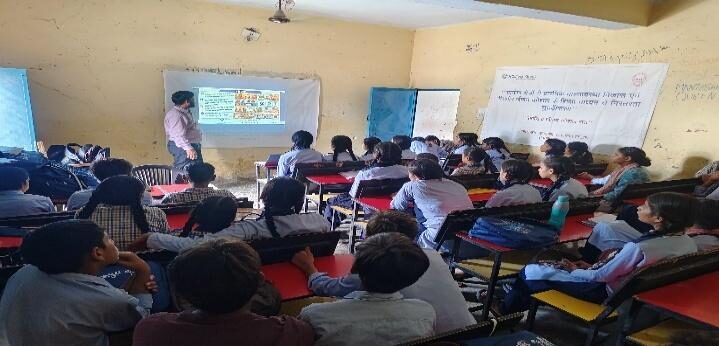
Students during a life skills session
5. Digital literacy sessions
Twelve sessions reached 481 adolescents. Sessions covered digital devices, the benefits and risks of the internet, safe and responsible use, social media and cyber safety, and basic computer skills — parts of a computer and use of the mouse and keyboard through games.
Outcomes: students can identify common digital devices and computer parts, have hands-on practice with the mouse and keyboard, and are more aware of digital risks and safe online behaviour.
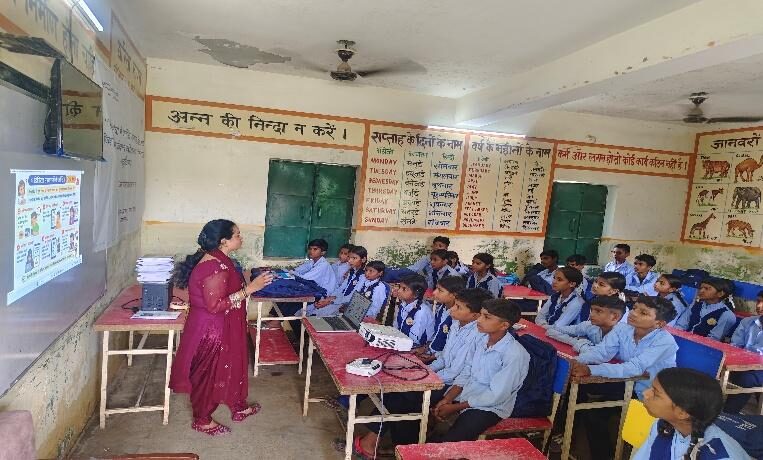
Digital literacy session in a government school
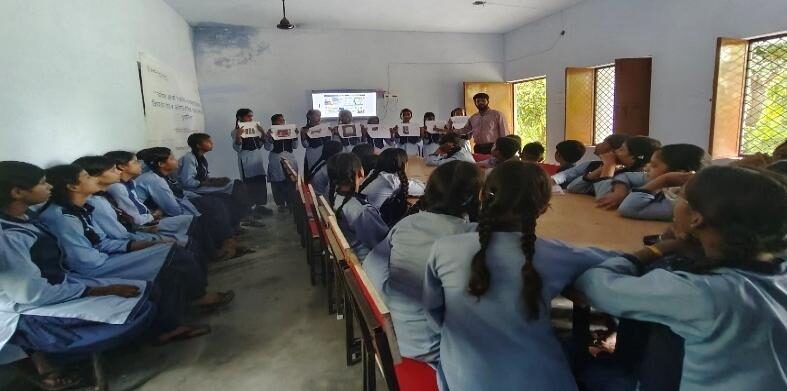
Students learning basic computer skills
6. Health, nutrition and menstrual hygiene awareness
Twelve sessions reached 508 adolescent girls and boys on physical growth and development, puberty and body changes, menstruation, myths and misconceptions, and the importance of a balanced diet.
Outcomes: a better understanding of growth, puberty and adolescence, and the ability to tell common myths from facts about puberty and menstruation.
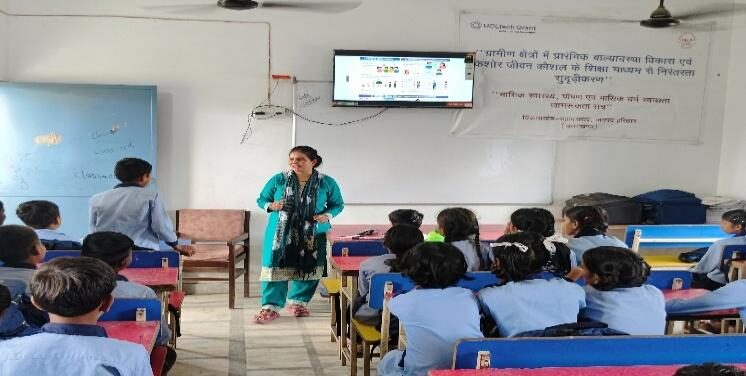
Health and nutrition awareness session for adolescents
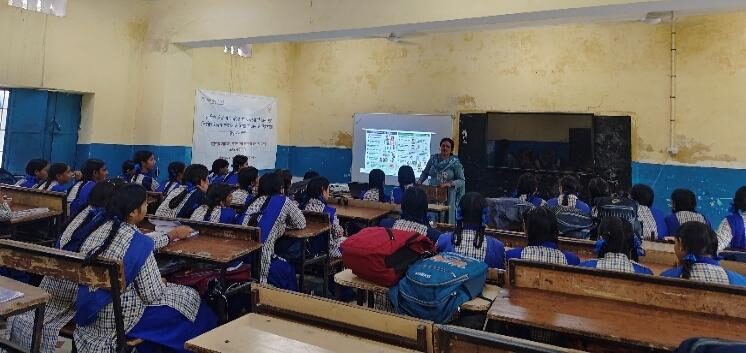
Puberty and menstrual hygiene awareness session
7. Parent meetings with School Management Committees
In September, parent meetings were held alongside regular SMC meetings at Government High School, Tanda Teera and Government Upper Primary School, Dhanpura. The SBMA team spoke on the importance of regular school attendance, the role of parents in the continuity of education, and creating a supportive learning environment at home.
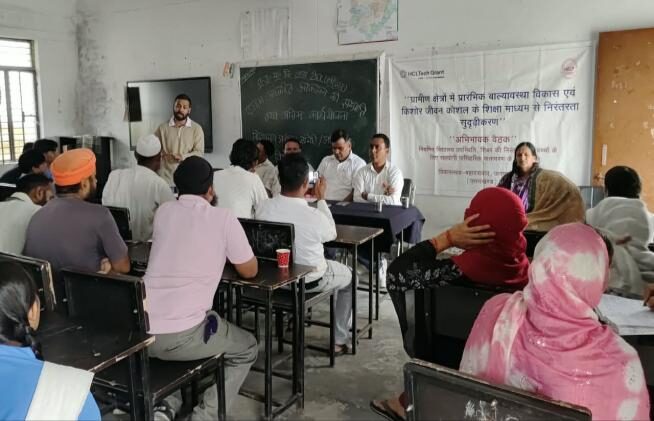
Parent meeting with the School Management Committee
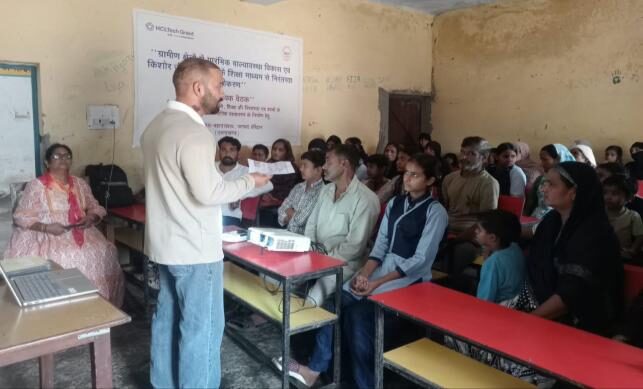
Parent meeting at a government upper primary school
8. National Deworming Day
An interactive session was held at Government High School, Jasvawala for 89 students on deworming, symptoms of worm infestation, prevention, handwashing and hygiene. A glitter-and-soap demonstration showed how germs spread through hands. The Medical Officer of PHC Jasvawala also spoke to students about HPV and its prevention.
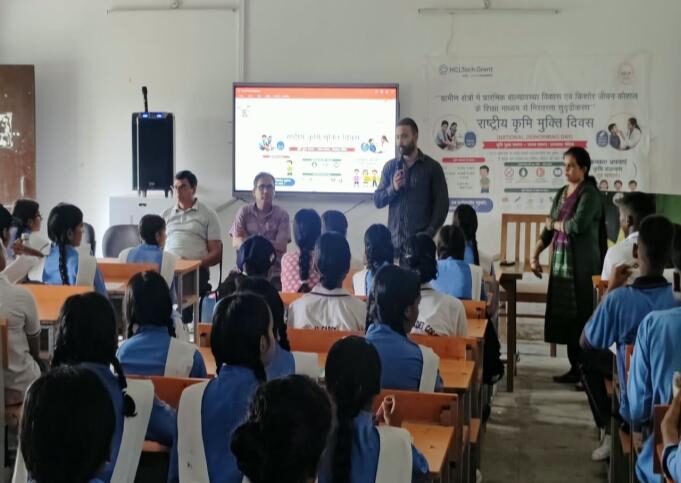
National Deworming Day awareness session
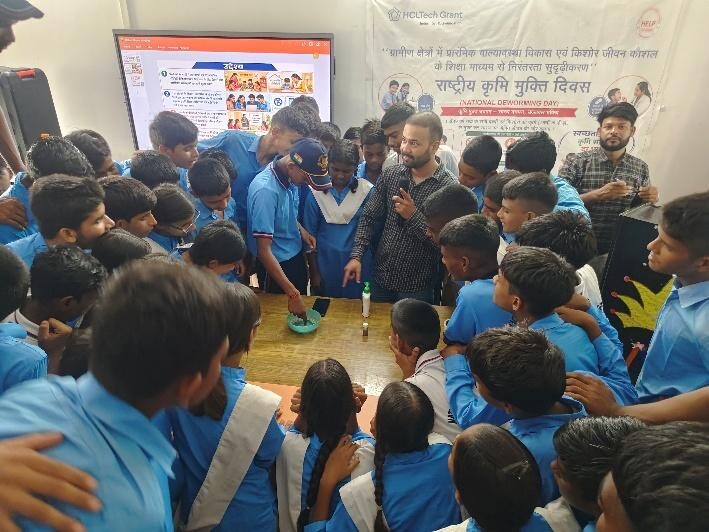
Students during the deworming and hygiene demonstration
9. Community meetings on girls' education and the Right to Education
Ten community meetings were held in the project villages (4 in July, 4 in August, 2 in September). July meetings with parents, caregivers and adolescent girls covered the importance of girls' education, barriers to it, and the community's role in preventing child marriage and school dropout. August and September meetings focused on every child's Right to Education, child rights, equal opportunity, and going beyond enrolment to ensure regular attendance and continued schooling.
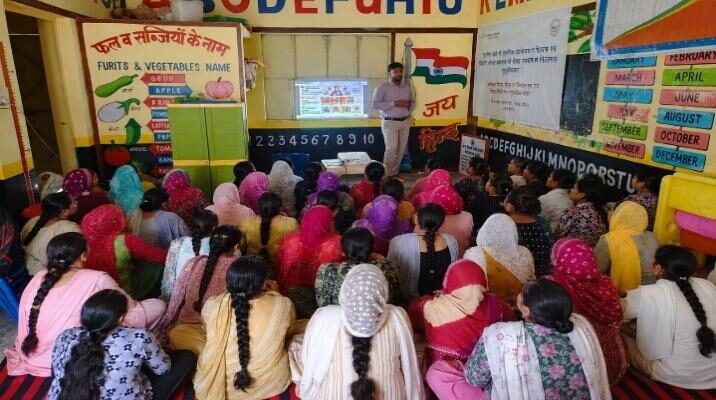
Community meeting on girls' education
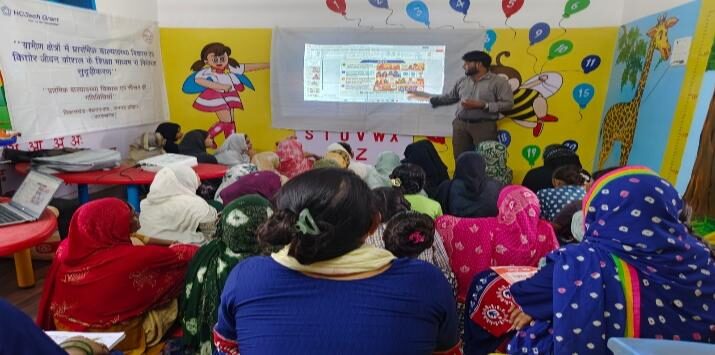
Community meeting on the Right to Education
Government approvals and media coverage
Government permissions. Before starting field activities, SBMA submitted official letters to the Department of Education and the Department of Women and Child Development. Approvals were received from both departments, enabling the team to work in government schools and Anganwadi Centres across the project area.
In the news. The programme's activities were covered by local media and shared on SBMA's own social media channels:
- Uttarakhand Uvach (news portal), 19 August 2026 — "कृमि मुक्त बचपन की ओर कदम: जसवाला में विद्यार्थियों को स्वच्छता और स्वास्थ्य का संदेश", on the National Deworming Day session at Government High School, Jasvawala.
- Uttarakhand Uvach (news portal) — a report on the play-based early childhood development session held at an Anganwadi Centre.
- Online news report, 19 August 2026 — "राष्ट्रीय कृमि मुक्ति दिवस पर राजकीय उच्च माध्यमिक विद्यालय जसवाला में जागरूकता कार्यक्रम आयोजित".
- SBMA Haridwar (Facebook), 11 July 2026 — "शिक्षित बेटी – सशक्त समाज की पहचान", on the community meeting on girls' education at Dhanpura.
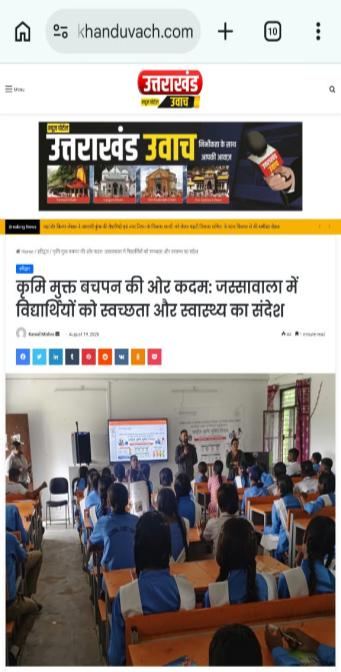
Uttarakhand Uvach: report on the National Deworming Day session at GHS Jasvawala (19 Aug 2026)
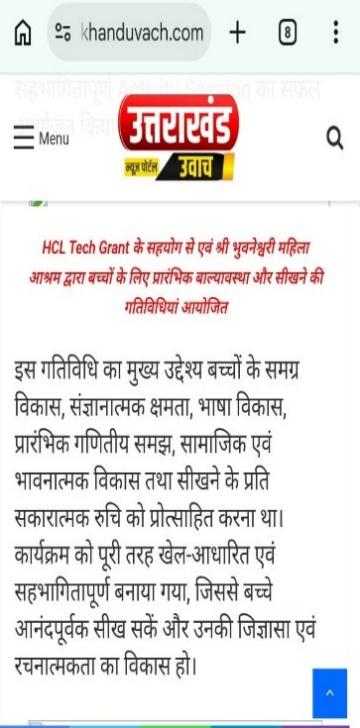
Uttarakhand Uvach: report on the early childhood development session at an Anganwadi Centre
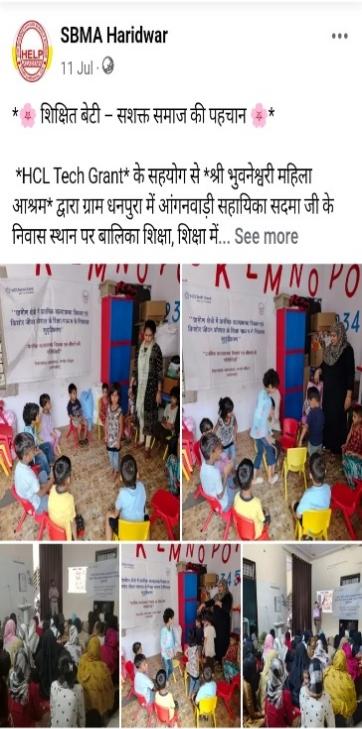
SBMA Haridwar Facebook post on the girls' education community meeting at Dhanpura (11 Jul 2026)
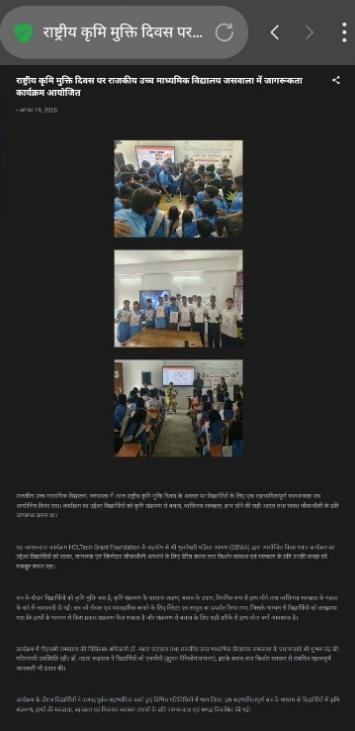
Online news report on the National Deworming Day awareness programme at GHS Jasvawala (19 Aug 2026)
Looking ahead — next quarter
Anganwadi activities
- 12 early stimulation sessions to promote early learning, holistic child development and school readiness.
- 12 parent sessions on early stimulation and positive parenting to strengthen home-based learning.
School activities
- Formation of 3 more adolescent peer groups at school and village level.
- 12 life skills sessions on responsibility, the power of a positive attitude and goal setting.
- 11 digital literacy sessions on internet basics, web browsing, and email creation and communication.
- 11 health, nutrition and menstrual hygiene sessions, including menstrual health and hygiene, mental health and emotional well-being.
- 3 parent meetings to encourage regular school attendance and strengthen parent–school engagement.
Community-level activities
- Celebration of International Day of the Girl Child and Global Handwashing Day in October through awareness and community engagement.
- 13 community-level meetings to promote girls' education, regular attendance, child development and community support for children's education and well-being.